

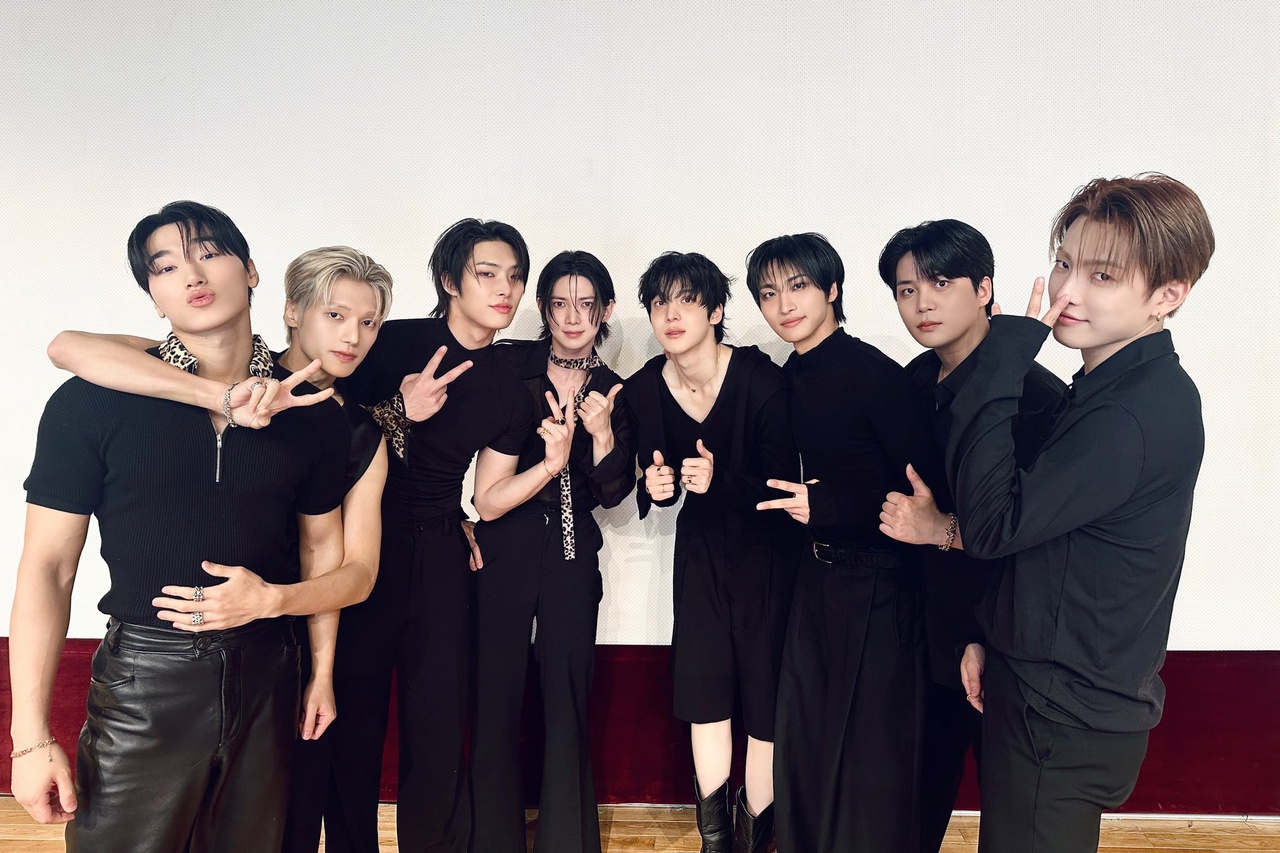
Eight years after debuting from a small agency with a pirate-themed mythology and a hunger to prove themselves, ATEEZ – Hongjoong, Seonghwa, Yunho, Yeosang, San, Mingi, Wooyoung, and Jongho – have arrived at what several outlets are calling their most confident era to date. With the February 2026 release of their 13th mini album, Golden Hour: Part.4, the octet has been giving a string of interviews that reveal how much the group has matured, both musically and as a unit.
A New Definition of “Desire”
Speaking with Clash Magazine, leader Hongjoong reflected on the throughline connecting ATEEZ’s 2018 debut to where the group stands now. Looking back at both moments, he pointed to the same driving force behind the band then and now – an appetite for great performances and great music, which he said he now sees blazing even more visibly in his members’ eyes. Eldest member Seonghwa, meanwhile, tied the album’s themes back to the group’s earliest imagery, noting that the word he’d use to describe their debut – “treasure” – feels, paradoxically, just as fitting for describing their present as a kind of shared history.
That sense of hard-won continuity runs through the whole album cycle. Rolling Stone India spoke with Seonghwa about the project’s narrative ambiguity, and he was intentionally cagey about pinning down a single meaning, telling the outlet the interpretation is something they’ll leave up to the listener as the story unfolds. He added that every part of the record, musically and narratively, carries a piece of who the members are.
Building ‘Adrenaline’ From the Ground Up
The album’s title track, “Adrenaline,” is a high-energy EDM number that the members describe as one of the more physically demanding songs they’ve recorded. In comments to Clash, Yeosang recalled that nailing the song’s signature line pushed him to sing with everything he had, to the point that he remembers his voice nearly giving out by the end of the session.
A separate press-conference interview covered by StarNews Korea captured the band’s collaborative – and often teasing – dynamic when discussing standout moments on the record. Mingi singled out Yeosang’s second-verse solo as a highlight, while Yeosang returned the compliment by praising Mingi’s rap delivery on the same track, calling it addictive and squarely his taste – a small exchange that says a lot about how the members talk about each other’s work. Vocalist San also noted that “Adrenaline” was never seriously in competition with another candidate for the title track; once the demo landed in the group chat, the choice felt obvious to everyone.
According to Mingi, who co-wrote the album, this cycle marked his first release since renewing his contract with the label, and he used it as an opportunity to consciously depart from the group’s earlier songwriting habits and push the overall mood in a new direction.
Eight Years, Fewer Arguments
One of the more candid moments from the StarNews interview touched on the mechanics of being an eight-member group. Asked how they manage to align on creative decisions, Mingi acknowledged that disagreements were more frequent in ATEEZ’s second and third years, but said the group has since grown more willing to accommodate each other’s perspectives as they’ve matured together.
That growing creative ownership was echoed in the group’s Billboard Korea Artist Edition cover interview, where several members described having real input into the band’s direction from the planning stages onward. Wooyoung said he’s quick to pitch ideas when it comes to styling and outfits, while Jongho recalled a case where a B-side track was promoted to title-track status specifically because the members pushed for it. Jongho added that the group also works closely with their choreography team to adjust movements until they feel distinctly “ATEEZ.”
Asked what actually makes a song feel like an ATEEZ song – given how much the group shifts between genres – the answers varied member to member. Hongjoong said the group’s sound comes down to their voices and delivery no matter the genre; Seonghwa pointed to the band’s constant search for “newness”; Yunho described it as knowing when to lean into a beat and when to pull back; and Yeosang simply credited the group’s refusal to be confined to one genre.
A “Golden Year” Ahead
For Yunho, Golden Hour: Part.4 is meant to set the tone for the rest of 2026. He told Clash he hopes the record marks the start of what he called ATEEZ’s golden year, and that he wants it to help make this year a genuinely special one for the group.
That optimism has carried into the group’s live shows. After a three-year absence, ATEEZ returned to Singapore in February 2026 with all eight members for a concert described by L’Officiel Singapore as loud, polished, and hard to forget – a sign that the group’s momentum off the back of Golden Hour: Part.4 is translating directly into their performances on the road.
Taken together, the run of 2026 interviews paints a picture of a group that has moved past the early growing pains StarNews touched on and into a phase defined by mutual trust, creative ownership, and a shared sense that – eight years in – they’re still just getting started.
Sources
- Clash Magazine – “ATEEZ And The Art Of Success”
- Rolling Stone India – “ATEEZ: Defining the Era of ‘Golden Hour: Part.4′”
- StarNews Korea – “ATEEZ Explodes ‘Adrenaline'” press-conference interview
- Billboard – ATEEZ Billboard Korea Artist Edition Interview
- L’Officiel Singapore – “ATEEZ Talks GOLDEN HOUR: Part 4”