In Q1 2026 alone, the world’s top 100 touring artists grossed $1.36 billion, up 15.7% year over year, and K-pop acts are driving a real chunk of that surge — BTS’s “Arirang” tour pulled in $139.7 million from just 13 shows this spring (Pollstar, March 2026). Bigger tours mean bigger crowds, pricier tickets, and a lot more that can go wrong if you show up unprepared.
Good news: almost everything that ruins a first K-pop concert — scalped tickets, dead phone batteries, ringing ears the next morning, getting crushed near the barricade — is avoidable with a bit of planning. This guide walks through exactly what to do before, during, and after the show, with real numbers behind every recommendation instead of vague “just be careful” advice.
Key Takeaways
- Buy only from official platforms with ID verification — resale scalpers have pushed some tickets to over 40x face value in 2026.
- A “loud rock concert” at 110 dB is only safe to stand near for about 1.5 minutes before hearing damage risk rises (CDC/NIOSH).
- Crowd density above roughly 4-5 people per square meter is the point where a crowd stops moving as individuals — know this number and give yourself room.
- K-pop fans increased merch spending 61% year over year in 2025, to $48.32 per person on average (atVenu) — budget for it ahead of time.

Step 1: Buy Your Tickets the Safe Way
By the end of this step, you’ll have a legitimate ticket in hand and know exactly how to spot a scam before you pay for one. This matters more than it used to: South Korean authorities flagged 1,868 posts advertising resold tickets to a single BTS Seoul concert in just seven weeks this year, and one NCT WISH show reportedly saw face-value tickets resold for nearly 50 times their original price.
Buy only through official platforms — Weverse, Interpark Global, Ticketmaster, or the venue’s own box office. Since mid-2024, Interpark Global has required passport-based identity verification before you can even complete a booking, which is a good sign the platform takes fraud seriously. If a seller messages you directly on social media with a “guaranteed” ticket, assume it’s fake until proven otherwise.
Screenshot your confirmation email and QR code the moment you get it, and save it somewhere that works offline — venue wifi on show day is never reliable.

Step 2: Budget for the Real Cost of the Night
Ticket prices for 2026 K-pop shows in the US typically run $80–$180 for standard upper-level seats, climbing to $250–$500 for floor seats and $400–$900+ for VIP packages with meet-and-greet perks — and that’s before resale markups (KoreaPortal, March 2026). Know which tier you’re paying for before you check out, since “VIP” doesn’t always mean what you think it means show to show.
Set aside money for merch too, not just the ticket. K-pop fans raised their average merch spending by 61% year over year in 2025, to $48.32 per person — the steepest jump of any genre tracked (atVenu, August 2025). Decide your merch budget before you’re standing in front of the table, not during.
Step 3: Pack a Bag That Actually Helps You
By the end of this step, you’ll have a bag that gets you through a 4-6 hour night without a mid-show emergency. Most venues restrict bag size for security, so check the venue’s policy first — then pack tight.
Non-negotiables:
- Your ticket QR code saved offline, plus a photo ID
- A portable phone charger — you’ll use your phone more than you think, for tickets, photos, and group chats
- Your official lightstick, fully charged if it’s Bluetooth-enabled
- Earplugs (more on why in Step 4)
- Cash for merch lines, where card readers sometimes go down under load
- A reusable water bottle if the venue allows refills inside
Leave the oversized bag at home. Security lines move faster for fans carrying less, and you’ll want your hands free to hold your lightstick up for hours.

Step 4: Protect Your Hearing Before It’s a Problem
A standard amplified show sits around 85 decibels, which the CDC says is safe for up to 8 hours — but get closer to the speakers and that number climbs fast. At around 110 dB, a level the CDC classifies as typical for a “loud rock concert,” the safe exposure limit drops to just 1.5 minutes, and noise-induced hearing loss can happen from a single exposure at 120 dB or above (CDC).
Foam earplugs don’t ruin the experience the way people assume — they take the harsh edge off without muffling the music, and you’ll still feel the bass in your chest either way. Keep a spare pair in your bag; you will lose the first one.
Step 5: Navigate the Line Without Getting Hurt
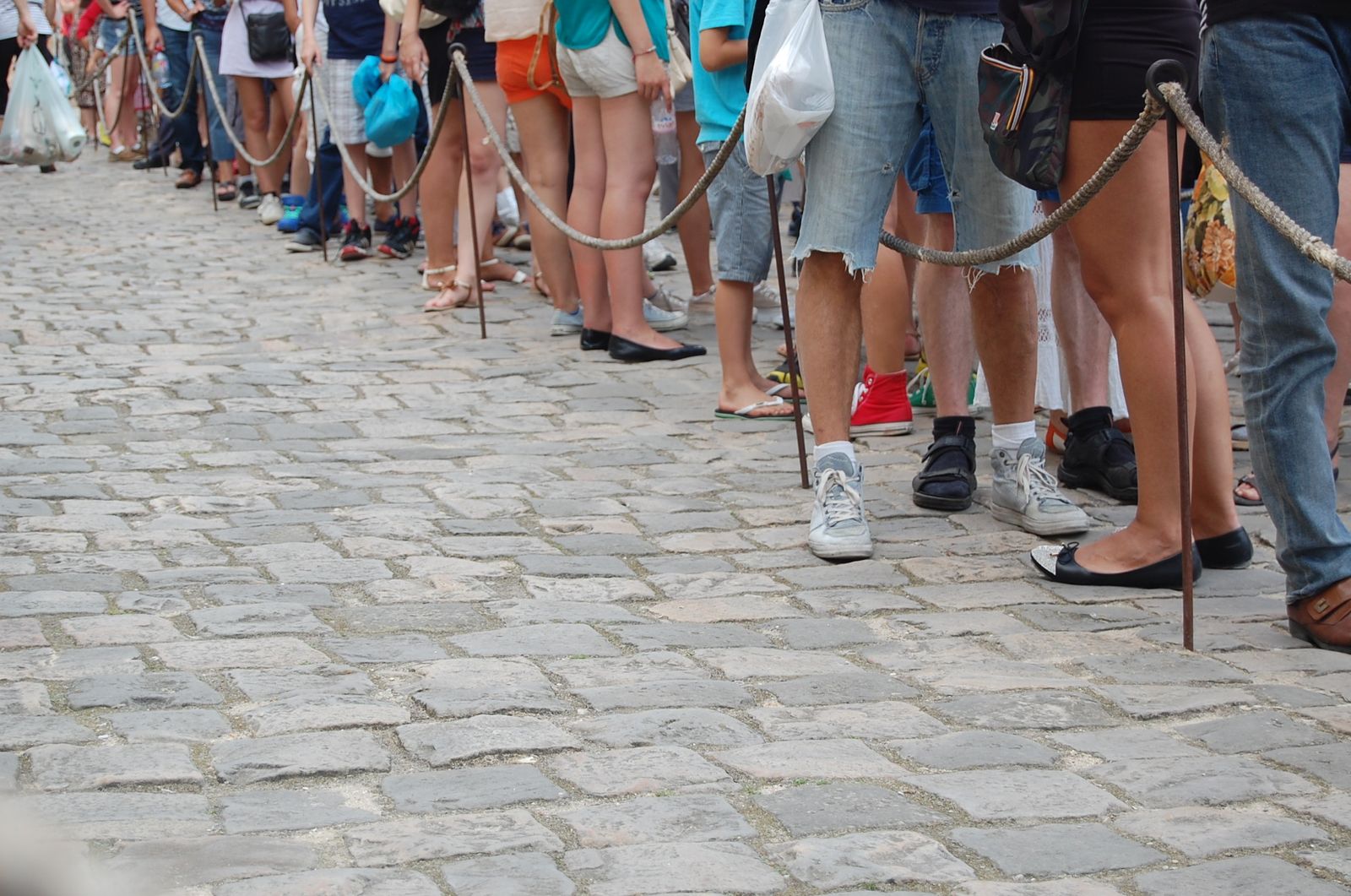
US K-pop fans have camped outside venues for 24 hours or more to secure a spot near the barricade, a GA line culture local news outlets have covered outside shows by BTS and Jung Kook in multiple cities. South Korean venues mostly avoid this by assigning queue numbers electronically through the ticket itself, so check whether your venue does the same before you plan to camp out.
Once doors open and the crowd starts moving toward the barricade, know this number: crowd-safety researchers consider roughly 4-5 people per square meter the threshold where a crowd stops behaving as individuals and starts moving as one unpredictable mass — the point where crush injuries become a real risk (G. Keith Still, crowd-safety science). If you feel pressure building around your chest or can’t move your arms freely, that’s your signal to work sideways toward open space immediately, not to wait it out.
Step 6: Handle Entry, Accessibility, and Show-Time Etiquette
Arrive with enough buffer for security screening, which slows down significantly at sold-out shows. If you or someone in your group needs accessibility accommodations, ask ahead — HYBE now offers wheelchair seating, sign-language interpreters, and 16-language live subtitles on Weverse, SM Entertainment has published a dedicated accessibility guidebook for promoters and venues, and JYP has added Auracast assistive-listening systems and barrier-free seating at recent shows (Korea JoongAng Daily, June 2026).
Once you’re inside, a little etiquette goes a long way: learn the fan chants for at least the singles beforehand, keep your phone down during quiet or emotional moments so the people behind you can actually see, and agree on a meeting spot with your group in case phones die or signal drops in a packed venue.

Common Mistakes First-Timers Make
Buying tickets from a random social media DM. It feels convenient in the moment, but there’s no recourse if the “ticket” turns out to be a screenshot. Stick to official platforms even if it means paying more or missing out.
Skipping earplugs because “it’s just one night.” One night at 110+ dB is exactly the kind of single exposure that can cause lasting damage. It’s the cheapest insurance you’ll buy all year.
Not eating beforehand. Lines move slowly, venue food lines move slower, and a 4-6 hour night on an empty stomach catches up with people fast — often right during the encore.
Overpacking. A bag stuffed with “just in case” items slows you down at security and gets heavy fast when you’re holding it up for hours. Pack the Step 3 list and stop there.
Assuming your phone will survive the whole night. Screaming crowds, constant photo-taking, and searching for signal all drain a battery fast. A dead phone at 11 p.m. in an unfamiliar part of town, with no way to call a ride, is a bad way to end a good night.

After the Show: Getting Home Safely
Thousands of people leaving the same venue at once creates its own kind of crush risk, just at the exits instead of the barricade. Don’t sprint for the door the second the lights come up — let the initial surge clear for a few minutes, especially near stairwells and narrow exits.
Arrange your ride or transit plan before the show starts, not after. Rideshare surge pricing spikes hard the moment a venue empties, and cell networks routinely get overloaded by everyone opening an app at once. If you’re meeting friends outside, pick a landmark away from the main exit crowd, since “meet by the entrance” stops meaning anything when a few thousand people are also standing there.
The plan that tends to hold up best isn’t the fanciest one — it’s a backup meeting spot picked before doors even open, precisely because it’s the only part of the plan that doesn’t depend on a phone signal working.
Watch: Real Fan Advice Before You Go
Written checklists only get you so far — these two go through the actual day-of experience:
A walkthrough of an actual concert day: line-up times, what ended up in the bag, and what got used versus what didn’t.
Aimed specifically at first-timers, with practical tips that apply whether it’s your first show or your fifth.
Frequently Asked Questions
How early should I arrive at a K-pop concert?
For GA/floor tickets, many dedicated fans arrive hours before doors open, and some line up the night before for high-demand shows. For seated tickets, arriving 60-90 minutes early is usually enough to clear security and find your seat without rushing.
Is it safe to buy resale tickets?
Only through platforms with buyer protection built in. Direct resale through social media carries real risk — South Korean authorities flagged over 1,800 resale posts for a single 2026 BTS concert in under two months, and some tickets have resold for many times face value.
Do I really need earplugs if I like the music loud?
Yes. The CDC classifies a “loud rock concert” at around 110 dB, where safe exposure drops to about 1.5 minutes — earplugs reduce volume enough to protect your hearing without meaningfully changing how the show feels.
What should I do if the crowd feels too tight?
Move sideways toward open space as soon as you notice it, not after you’re struggling to move your arms. Crowd-safety researchers flag roughly 4-5 people per square meter as the point where individual movement becomes impossible.
What if I have accessibility needs?
Contact the venue or your agency’s fan platform ahead of time. HYBE, SM, and JYP have all expanded 2026 accessibility offerings, including wheelchair seating, sign-language interpretation, live subtitles, and assistive-listening systems — but availability varies by venue, so confirm before show day.
You’re Ready
None of this is complicated once you’ve done it once: buy from official sources, budget for the real cost, pack light but smart, protect your ears, respect the crowd around you, and know what accommodations exist if you need them. Do that, and the only thing you’ll be exhausted from tomorrow is screaming your favorite member’s name for three straight hours.